Our Team

Madeline Kim
Project Manager
A fourth-year data science & statistics student. She oversaw the planning, organization, and execution of the project, ensuring that the team stayed on task and on track to meeting deadlines successfully. She delegated tasks and coordinated meetings. She also edited pages of the website and created data visualizations such as the line chart and scatterplot on Tableau.
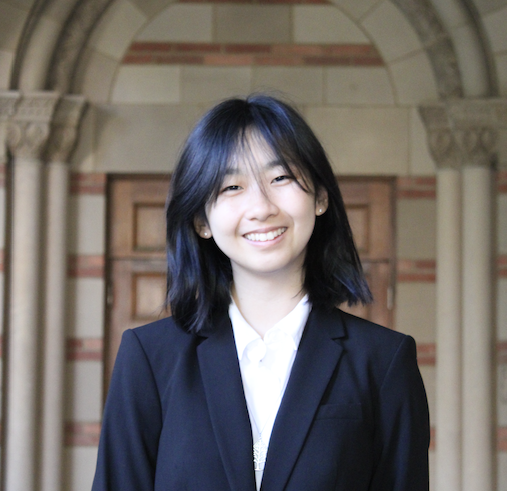
Jennifer Liu
Data Visualization Specialist / Editor
A fourth-year neuroscience student with a minor in Digital Humanities. She created wireframes for the site and edited all the text and visuals for accessibility, clarity, and design. She gave full technical descriptions of the three levels of a DH project. Additionally, she was responsible for data visualizations such as the map, timeline, and bubble chart via applications like Tableau and TimelineJS.

Hajeong Hwang
Web Designer
A fourth-year international developmental studies student with a minor in Digital Humanities. She created the server space for the project and set up the site and its components. Additionally, she analyzed and developed the introduction and other content.

Aline Silva Rodrigues
Content Developer
A fifth-year labor studies student. She was responsible for the identification and analysis of written content. She also collaborated with teammates in creating data visualizations with Tableau and developed one of the research questions.

Sanjana Chadive
Content Developer
A fourth-year comparative literature student. She analyzed and developed the literature review in our narratives and contributed to the annotated bibliography. She also assisted in creating the bar chart in the data visualizations using Google.
Three Levels of Digital Humanities Projects
1. Sources
2. Processing
3. Presentation
Sources
Our research studies the relationship between the COVID-19 pandemic and K-12 education. Our team utilized different data sets from the Stanford Education Data Archive, or SEDA Data Downloads, such as seda_cov_state_pool_5.0; SEDA holds publicly available data files, technical documentation, and codebooks. In addition to the data accessible on this site, we used a combination of trustworthy, peer-edited books, scholarly journal articles, and official organization websites for background information, providing a perspective and placing the data set into a place and time. Our 15 articles that we reviewed in our annotated bibliography elucidated the already known effects of the COVID-19 pandemic on students in all grades, whether it be K-12 or higher education. They also directed us toward gaps in research.
Using the information available from our literature as well as the data provided on SEDA, we developed two research questions, as we commonly noticed the consistent trend of those who have access to fewer resources performing even worse than before due to remote learning and increased risk of disease (Chung and Kim 2022). Moreover, states and the effects of individual state policies on education were hardly analyzed by any journal article. Using an approach where we consider socioeconomic, political, and geographic factors—even if it’s only in the United States—is necessary for the growth of our nation and the welfare of our future, as moving forward to improve the education of students post-pandemic is integral to the success of our future.
Processing
Many of our SEDA data sets were separated into pre-COVID results (up to 2019 data) and post-COVID results (2022 and 2023 data) with no data points during the years at the height of the pandemic (2020 and 2021). This data consisted of many different categories, though we mainly focused on racial index, socioeconomic status [SES composite], standard mean achievement, and standard error of achievement. While the information from the Stanford Education Data Archive was mostly clean, some cleaning and manipulations of the data were necessary because of the strictly specific and different categories that were provided between each of the data sets.
The map created was important for showing the geographical context of our data: how different states affect test-based achievement. We used Tableau to graph our locations. Tableau was also used for our data visualizations, with each visualization contributing to answering our research question. Data visualizations were integral for comparing states and noticing patterns between categories. The benefit of Tableau was its interactivity and its varying graphs that can include many different variables. Google Sheets was also used for one of our bar graphs displaying average poverty rate.
Presentation
We used Humspace portal, provided by the University of California, Los Angeles’s Digital Humanities Department, to host this WordPress. Editing with Kubio, we created an easily navigable user-friendly website. We used the font Mullish in varying sizes and weights for all of our copy, with consistent styling for headlines and copy. There is one main color in our palette: blue. We have one accent color, which is yellow. Separating out information into expected formatting makes it easier to digest. Our charts and visualizations are embedded with HTML code to enhance the user experience.
To ensure accessibility, every image and visualization has a short blurb describing the graphic. Our website has high-contrast colors.
Acknowledgements
Our team would like to extend our gratitude to our TA Nick Schwieterman for his invaluable support, feedback, and guidance through our quarter while we worked on our research questions, data sets, and content. We would also like to thank Professor Albrezzi for her expertise and content in her Digital Humanities 101 lectures and feedback.